Site intake
Location, lot shape, road access, zoning, height constraints, sunlight rules, rent comps, build cost, and exit assumptions.
 BLD
BLD
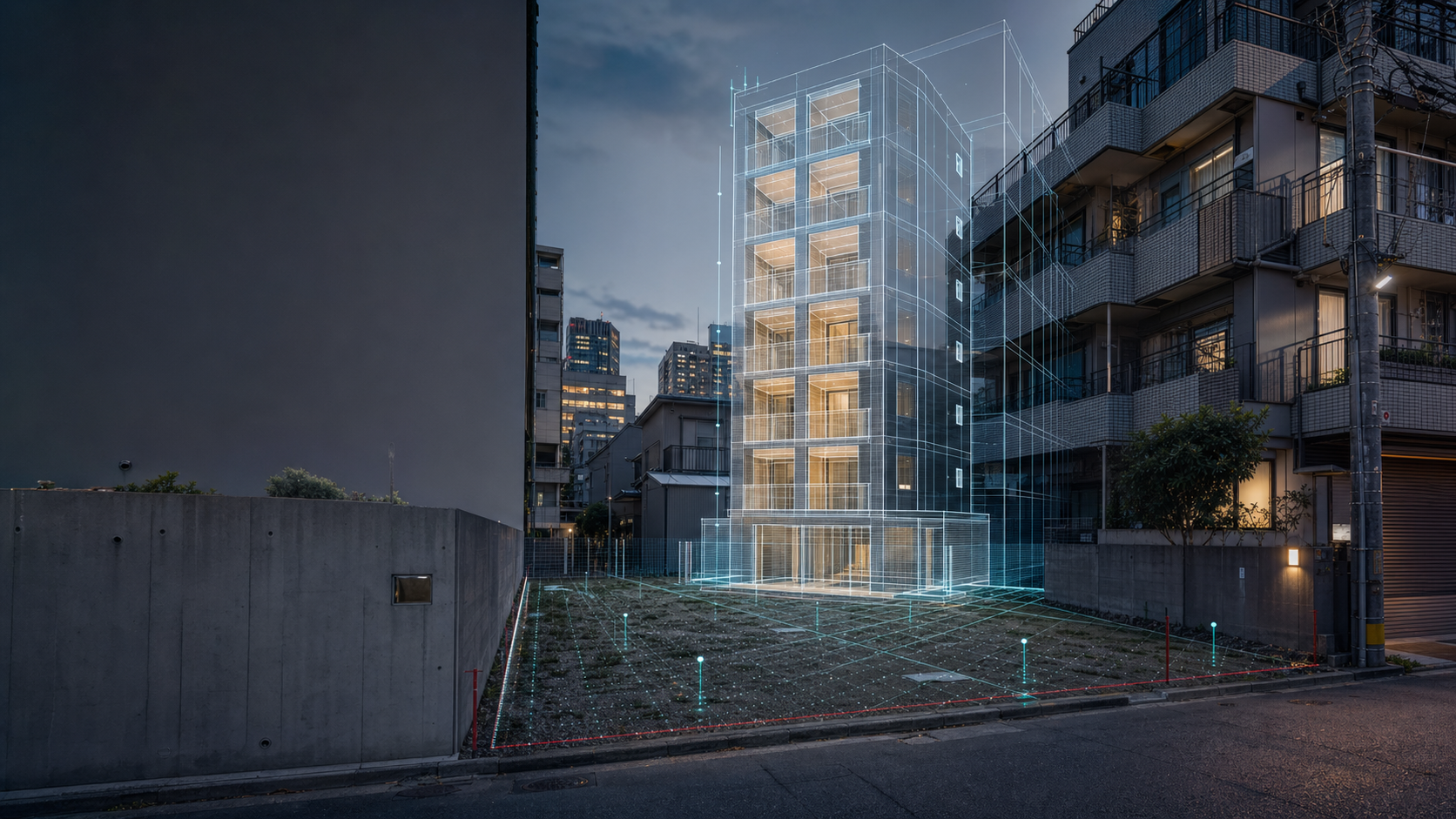
ZWEICHAIN Project | AutoCalc Digital Twin Building
Old Tokyo property? Screen potential rebuild upside before selling.
Build, not just buy
AutoCalc started in 2017 as an internal Tokyo apartment planning engine. BLD is the public build vertical around that engine: screen land, older apartments, and scratch-and-build sites; create a digital twin development case; and structure a joint venture where the owner may share in the value that a simple land sale would leave behind.
The engine
Fast first pass, deeper due diligence before capital or construction decisions.
Location, lot shape, road access, zoning, height constraints, sunlight rules, rent comps, build cost, and exit assumptions.
AutoCalc explores apartment massing, room mix, floor count, leasable area, and sale or hold scenarios in about 30 seconds for a first pass.
The plan becomes a visual digital twin case with geometry, constraints, pricing logic, and review evidence.
The owner sees an indicative sale comparison next to the BLD build case, then chooses whether deeper co-development review is worthwhile.
Owner-side venture
Many Tokyo owners know the land has value, but not which redevelopment scenario may be worth deeper review. A buyer usually prices in that upside for themselves. BLD changes the conversation: AutoCalc shows the possible structure, BLD organizes the development team, and the owner can remain economically involved through a project-by-project profit-sharing joint venture.
Fast certainty, but the redevelopment upside usually moves to the buyer.
Owner contributes the real asset or development right, while BLD organizes calculation, digital twin, development partners, and project-specific economic sharing.
How the owner JV works
The numbers below are an illustration, not an offer or appraisal.
If deeper review supports the case, the JV term sheet defines land value, capital contribution, BLD fee, reserve, profit split, exit choices, and downside handling before anyone commits to demolition, financing, or construction.
Owner can stop after the initial AutoCalc screen unless a separate paid professional review is approved.
Architect, survey, legal, tax, finance, tenant, demolition, and construction assumptions are checked.
Land title path, valuation, governance, BLD fee, capital stack, overrun treatment, and exit rights are written down.
Only then does the project move toward permitting, financing, demolition, construction, lease-up, sale, or hold.
Owner redevelopment roadmap
Each site can stop early if the economics, permissions, or owner goals do not fit.
Address, lot, old building, owner goal, rough constraints, and AutoCalc candidate plan.
Survey, zoning, road, sunlight, tenant, demolition, rent, cost, finance, legal, and tax checks.
Compare sell, hold, rebuild, JV, lease, SPV, or other title and capital paths.
Set valuation, responsibilities, costs, fees, profit split, governance, delays, overruns, and exits.
Permits, financing, tenant handling, demolition, construction, management, lease-up, sale, or hold.
Where BLD searches
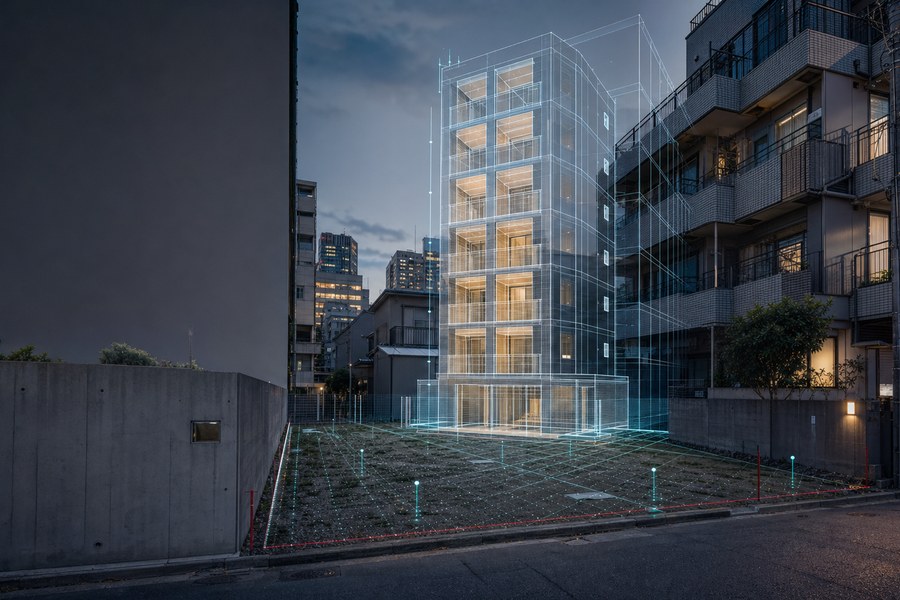
Digital twin build flow
BLD is not only a spreadsheet valuation. The site, possible structure, development assumptions, construction path, and owner economics are organized as a digital twin case so partners can inspect the project before committing.
Collect parcel, access, local constraints, old building state, owner goals, and market context.
Generate candidate structures, unit counts, rent or sale logic, build cost range, and return scenario.
Turn the candidate into a visual CAD-backed model for owner, partner, and design review.
Prepare role split, owner economics, capital stack, development schedule, and project-specific disclosures.
Track record and lineage
Public claims should stay tied to source releases and project records.
The first AutoCalc generation was published publicly in 2017, then kept mostly internal for planning and development use.
The engine informed Tokyo apartment projects at roughly $100M total value, according to project history and AutoCalc public release materials.
Patent-backed AutoCalc, 3D CAD, AI, and blockchain experience are packaged into owner-facing development opportunity discovery.
BLD screens opportunities only. This page is not an appraisal, offer, investment advice, permit determination, securities or token offering, or guarantee of profit, financing, construction cost, approvals, liquidity, completion, or tax treatment.
Start with one address
The first screen is not an offer, appraisal, investment recommendation, permit approval, or construction guarantee. It is a way to decide whether deeper AutoCalc and professional review are worth doing.